Seven concise working artifacts: what I saw, why it mattered, and the decision or test that followed—plus the production log behind the spec films.
01 · EffyDesk · live DTC account
Did creator identity behave like a performance lever?
I rebuilt this account read for the portfolio from my seven-month campaign reporting workbook.
$491,358CAD total spend analyzed — ~$70K/month
4.99xblended account ROAS
3,012purchases in the reporting period
$2.45MCAD attributed revenue
Comparison
Creator-whitelisted7.47x
Brand-owned prospecting4.60x
A 62% difference across $64,840 CAD in spend. During BFCM, whitelisted ads reached 12.28x—above retargeting at 11.38x and catalog at 11.88x.
Pattern
Whitelisting spend moved from $12,915 → $3,004 → $0 → $0 from January through April. Blended ROAS moved 4.69 → 3.57 → 3.48 → 3.09 across the same months.
DecisionProtect creator whitelisting as a dedicated performance lane.
Test creator identity against brand-owned delivery while holding offer and format as constant as possible.
Client account. I owned the reporting and findings; the consultancy ran execution.
02 · BoomBoom · independent case study
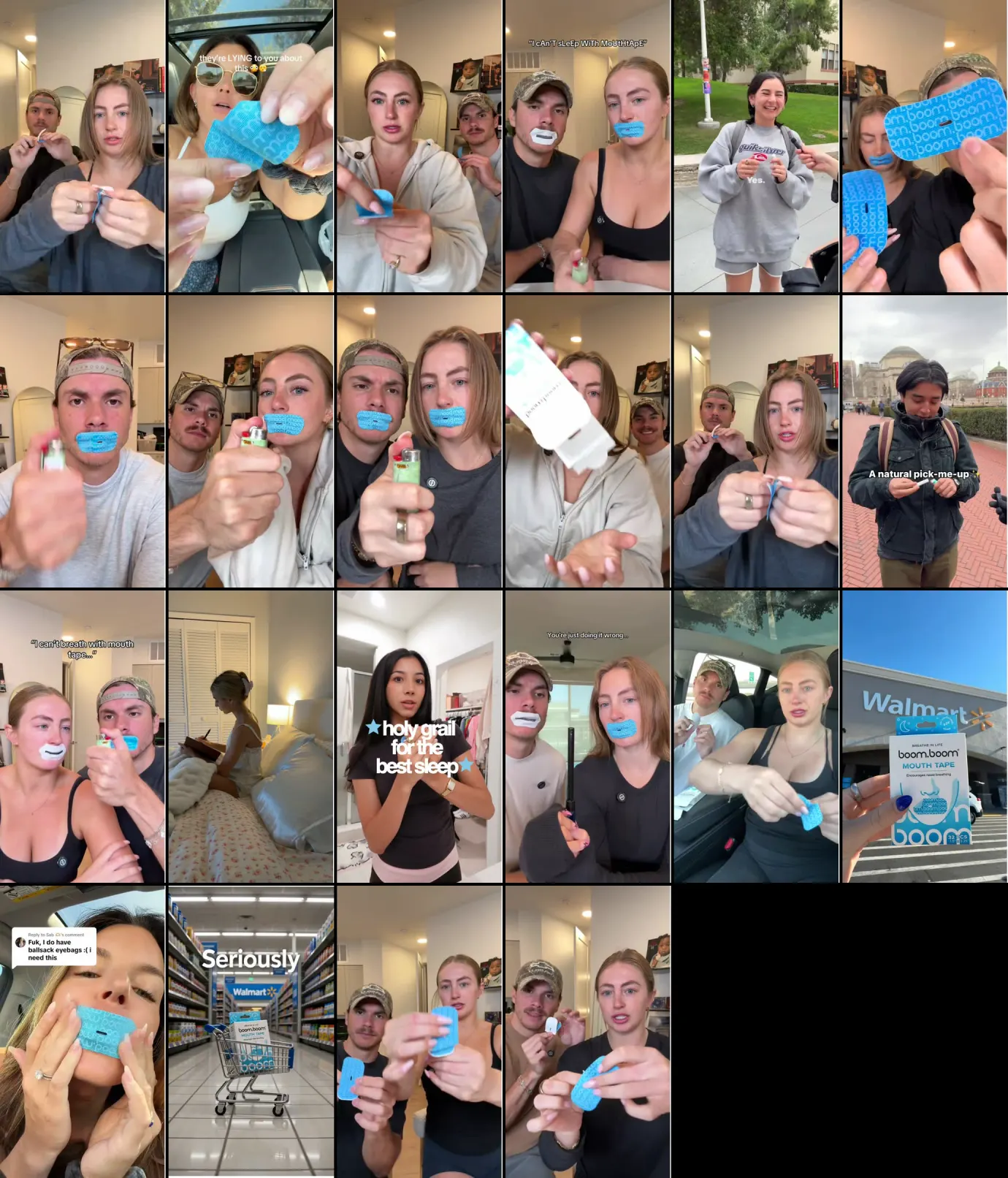
72 assets became one map of what to test next.
I normalized the active Meta library into 54 creative units and eight angles, then cross-read it against the brand’s TikTok winners.
Meta / mouth tapePersuasion-heavy
Longer 41–57 second assets carried benefits, objections, mechanism, and product explanation.
TikTok / nasal stickReach-heavy
Top creatives used one locked shot, 10–15 seconds, one caption, and an identity moment rather than a benefit list.
Hypothesis
The short identity-led container—not the unsafe claim—is the transferable asset.
Variable
Creative shape: one shot, one caption, one human moment.
Control
Current product-led Meta/TikTok creative for the same SKU.
Kill
Stop if hold rate and CTR trail the platform control after comparable delivery.
Independent strategy and spec creative built from public Meta and TikTok evidence.
03 · Emma Relief · independent case study
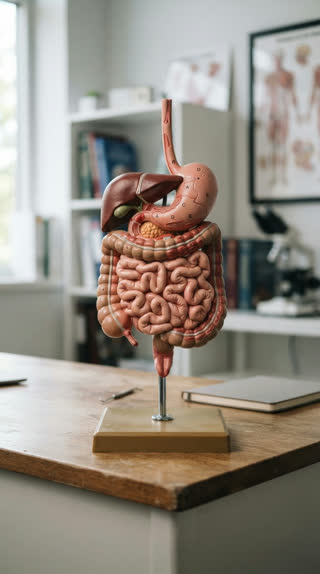
The category had many villains. Nobody made probiotics one of them.
A census of roughly 460 active videos revealed five angles using the same ten-beat persuasion structure—and one message gap hiding inside the category’s own logic.
The opening
“Your probiotic may be making the problem worse.”
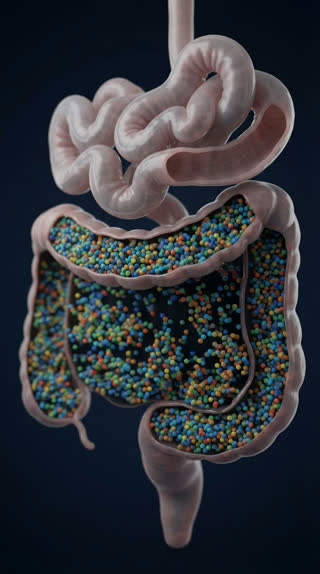
The mechanism reframes the supplement from ineffective to counterproductive: adding bacteria to the wrong room, then wondering why the room feels more crowded.
The ten-beat spine, storyboarded
Five competing angles all ran the same ten-beat persuasion structure. Rather than invent a new shape, I wrote to theirs and changed the villain—so the script competes on the argument, not on the format. Each beat below is the hero frame from the 3:30 storyboard.
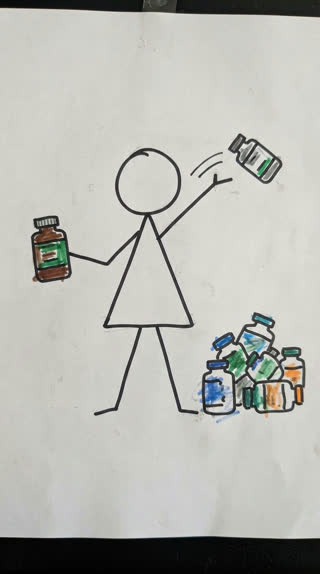
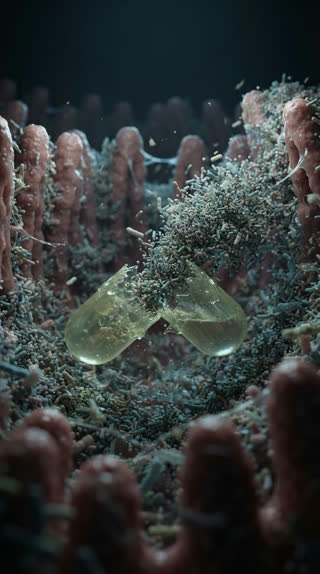
Beat 1 · 0:00–0:08Cold-open self-diagnosticA distended midsection, framed as a question the viewer answers about themselves.Beat 2 · 0:08–0:22Rename the conditionNot bloating. An overgrowth with a name, which makes it a problem with a cause.Beat 3 · 0:22–0:38EscalateThe social cost: the waistband at a desk, all day, in front of other people.Beat 4 · 0:38–0:50Rapid-fire negationHand-drawn on purpose—everything already tried, dismissed faster than it can be argued with.Beat 5 · 0:50–1:45Mechanism, via the wrong roomThe load-bearing beat. Bacteria delivered to a room that is already full.Beat 6 · 1:45–2:20The backfireThe turn: the supplement is not failing to help, it is actively adding to the crowd.Beat 7 · 2:20–2:40Authority handoffA plain clinical wall with no readable credentials—see the production log.Beat 8 · 2:40–3:00Name the method, not the productThe protocol becomes the thing being sold, so the claim stays about the approach.
—
Beat 9 · 3:00–3:12Friction removal + CTAFriction removal and first CTA. A text card—no new footage, so no frame was rendered.Beat 10 · 3:12–3:30Loss-framed closeReturn to the presenter for the cost of doing nothing, then the CTA repeat.
Evidence
Public ad-library census, frame-level teardown, customer-language research.
Mechanism
Wrong-room analogy: physical and understandable before it becomes scientific.
Deliverable
Hook, script, storyboard, generated production assets, voiceover, and captions.
Test
Keep only if three-second hold and outbound CTR beat the current opening.
Independent strategy and spec creative. Not run as a paid ad.
04 · Venice Music · client engagement
The account was confusing demand capture with demand generation.
Brand demand made the inherited account look healthier than its non-brand acquisition engine actually was.
ProblemWhy it matteredChange
Mixed conversion goalsSoft and hard actions taught bidding different definitions of success.Optimize around purchase / paid subscription.
Keyword collisionCampaigns competed and blurred intent.Separate intent and continuously sculpt negatives.
PMax brand captureExisting demand appeared to be efficient acquisition.Move brand protection into its own campaign.
Arbitrary bid capsHigh-intent terms could not compete or generate learning.Use conversion-oriented bidding with cleaner signals.
~80%lower spend within roughly one month
Paid subscriptions increased slightly. A post-restructure August report documents $3,506 in spend and 20 paid subscriptions.
Client engagement. I audited, designed, implemented, and monitored the Google Ads rebuild; broader channel work was collaborative.
05 · Scratch Event DJs · owned channel
We were renting attention. So I built a channel we owned.
Outbound bought every conversation one at a time. A publication with its own name and a quarterly rhythm compounds instead.
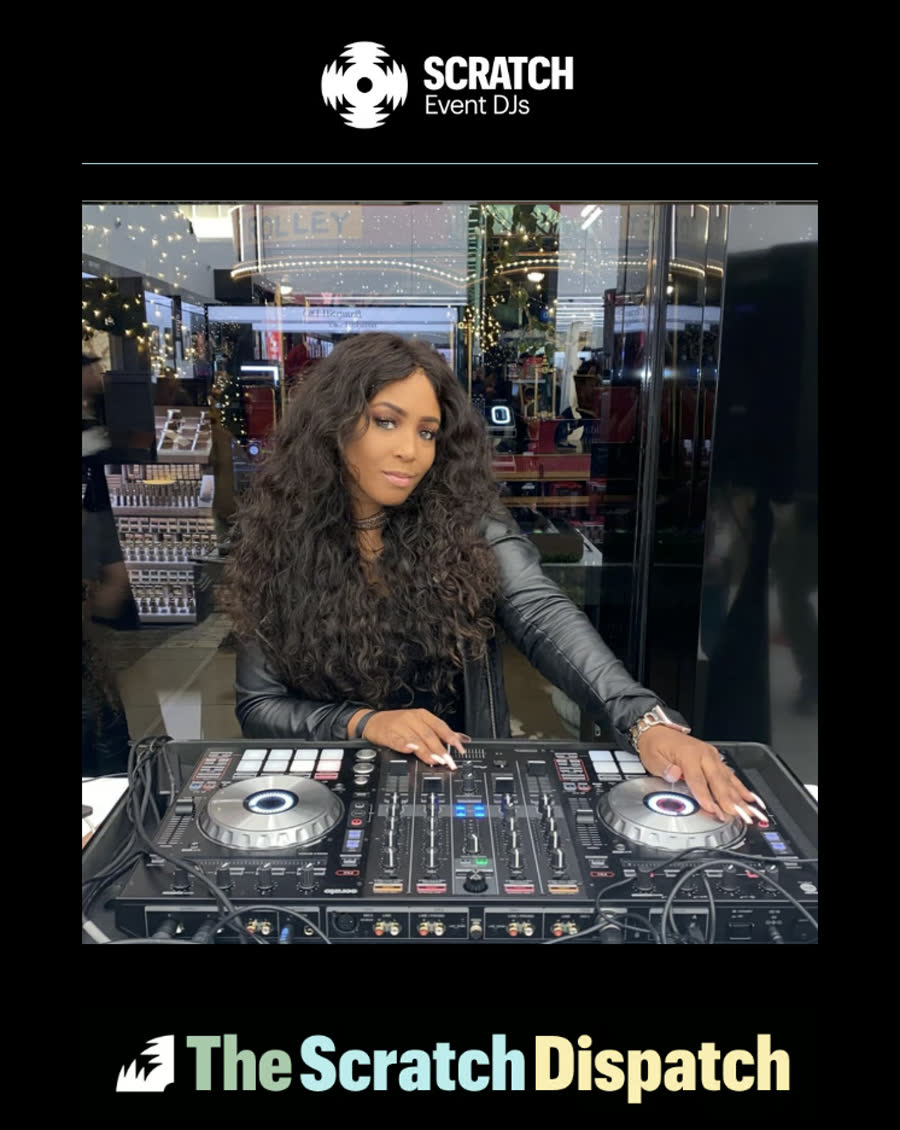
Owned channel · The Scratch Dispatch
I argued for years that Scratch needed a channel it owned rather than renting attention through outbound. I ideated it, developed the format, designed and assembled it in Figma, wrote and structured every issue, and established it as a recurring quarterly send to roughly 1,800 contacts. It got its own masthead, because a channel with a name gets opened and a “company update” does not.
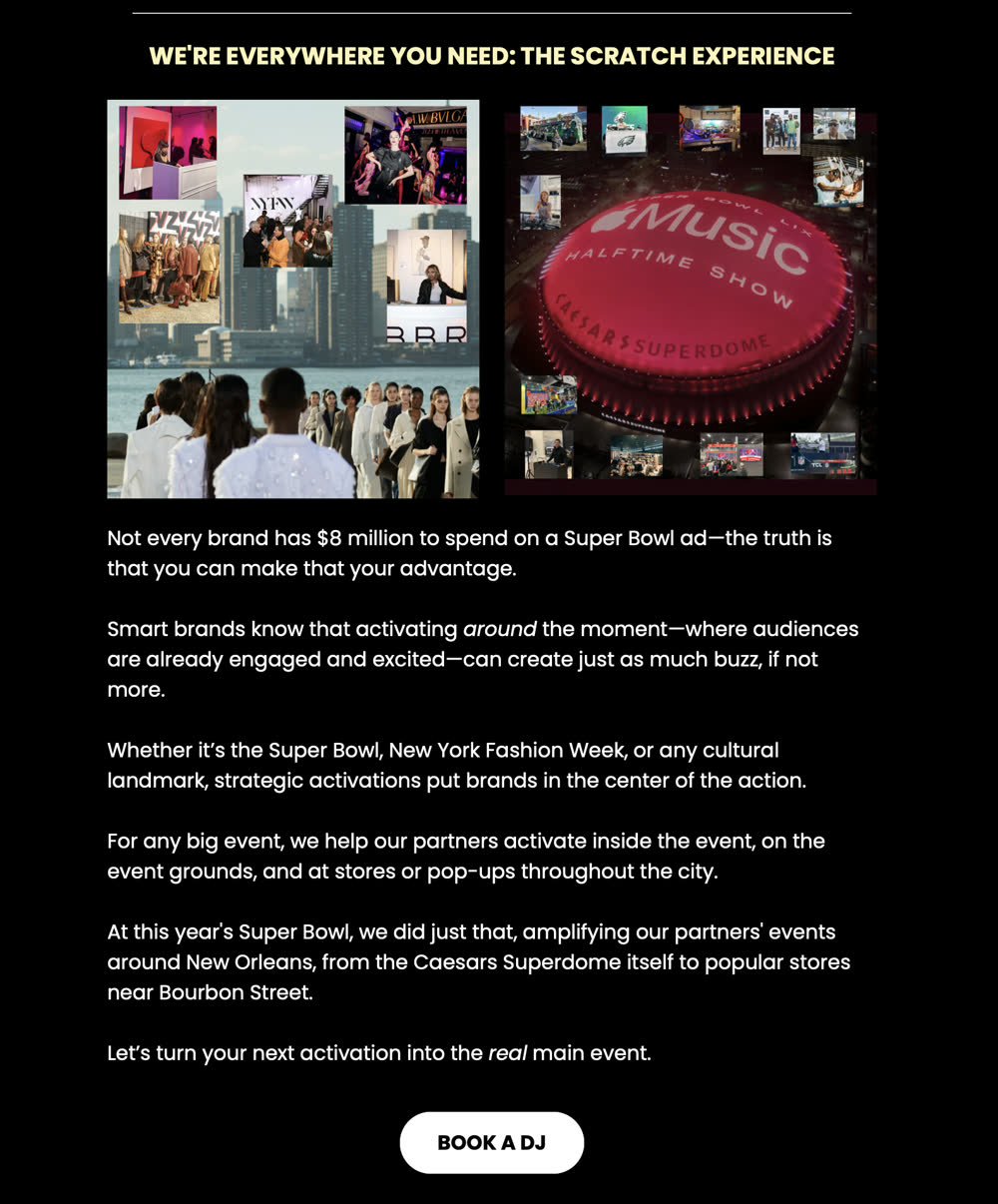
Masthead and cover. The publication gets its own wordmark, separate from the company logo.One section, end to end: header, proof imagery, the argument, single CTA.
The angle
“Not every brand has $8 million to spend on a Super Bowl ad—the truth is that you can make that your advantage.”
The issue takes the reader’s biggest objection—we cannot compete at that budget—and reframes it as the strategy: activate around the moment, where the audience is already gathered. Then it proves it with what Scratch actually did at Super Bowl LIX and New York Fashion Week, and closes on “let’s turn your next activation into the real main event.” One CTA: Book a DJ.
What I owned
The proposal — a channel we own, not attention we rent
Masthead, format and editorial structure
Design and assembly in Figma
The writing — hook, argument, proof, CTA
Cadence — quarterly, ~4 sends a year to ~1,800 contacts
What the channel returned
Commission-qualified revenue
$34,250
Client accounts sourced
4
Largest single account
$22,000
Period
Jan–Sep 2025
Client names withheld.
Where this channel sat
Across three years, Scratch’s final commission records credited $201,146 in qualified booked revenue across 40 accounts I sourced or reactivated—12.3% of the client book. The newsletter was one channel inside that portfolio, and the cheapest one to run.
LinkedIn ads$113,5167 accounts
The Dispatch$34,2504 accounts · 4 sends a year
Email$22,0504 accounts
Four sends a year produced revenue within reach of a paid channel running continuously.
Three years of B2B demand generation at Scratch Event DJs. Sales closed and serviced the accounts.
We did not have a production problem. We had a collection problem.
The activations already generated the proof. The brief’s job was to make capturing it fast, repeatable, rights-safe, and useful to paid and organic teams.
01Before / after
Same place, height, and angle: empty room before doors, full room at peak.
02Room at peak
One wide shot and one closer pass; crowd energy must read without sound.
03Faces
Clients, staff, guests, and the moment a track lands.
04The DJ
Portrait stills, one working clip, and the moment the room turns.
Primary signal
Three-second view rate and hold rate versus brand-produced social.
Format test
Before/after pairs versus room-only versus DJ-forward.
Commercial signal
Profile visits, inbound DMs, and whether sales attaches clips unprompted.
Kill
If creator content loses on hold rate in 60 days, rewrite the brief—not the roster.
My own spec work, built from an opportunity the role surfaced.
07 · AI-directed production · spec work · built 31 Aug – 4 Sep 2026
The model renders. The judgment is deciding which take to kill.
Both spec films in this portfolio were produced by directing image, motion and voice models. This is the iteration log behind them—the takes I threw out, the takes that replaced them, and the rules I now build to.
Budget logic
Stills on Nano Banana 2 Lite cost one credit each; voiceover on Seed Audio 1.0 costs a tenth of one. Motion is the only expensive step, so every beat is storyboarded first and only the shots that must move get animated. On the mouth-tape build, Seedance 2.0 quoted 22.5 credits per five seconds and then refused the job as plan-gated—the cost command does not check entitlement. Seedance 2.0 Mini ran at 2.5 credits per second, held the same start frames, and gave visibly more facial animation than Veo 3.1 Lite. Choosing Mini paid for a full first pass and three reshoots for less than two clips of full Seedance.
Killed and replaced · the bloat shot
Killed · take 1The shirt tears open at 4.0s and never recovers. Veo 3.1 Lite, 8s from a single start frame.Kept · take 2Re-prompted with explicit garment constraints—fabric never tears, rips, splits or rides up. Holds clean for the full eight seconds.
Same start frame, same model, same eight seconds. The only variable is the constraint language in the prompt.
Killed and replaced · the CTA gesture
The clip looked correct at a glance. The brief called for a cart tap, so I checked it frame by frame on a crop of the hand rather than on a full-frame contact sheet.
Killed · take 1Twelve frames. The finger rests on the counter and never leaves it—the tap simply never happens.Kept · take 4Fixed by describing the physical travel instead of naming the gesture: lifts several centimetres clear, then comes down and presses.
The rule that came out of it: QC a named gesture on a crop of the relevant region, never on a full-frame sheet.
Killed on judgment, not on defect
Third shot, every take. Technically clean and strategically wrong: the distension read as pregnancy rather than bloating, and wardrobe colour had drifted from the previous beat. No prompt fixes a shot that is executing the wrong idea. Replaced with a slow push-in on the bottle, which reads as accusation and closes back to the opening frame.
Rules carried forward
Reproducible failure
Veo 3.1 Lite and Seedance 2.0 Mini both animated a rigid mouth strip into a grin. Never ask a video model to perform expression on a taped mouth—freeze the region and act with the eyes.
Measure, don’t assume
Seed Audio’s speech rate is not linear on short lines: the same CTA returned 101 wpm at one setting and 165 wpm at the next. Measure the render, never trust the parameter.
Mix from data
Generated ambience came back 40 dB quieter than voice on one build and louder than voice on the next. Bed levels are now computed from measured source loudness at build time.
Safety filters shape craft
A still passed the image filter while the same action failed the motion filter. Starting the clip after the action and animating only the reaction cleared it without changing the idea.
The catch that mattered most
The first presenter render came back wearing a real hospital’s credentials—actual university names legible on the diplomas behind a synthetic doctor. Every later frame was re-prompted to a plain clinical wall with no readable text. A generated presenter must never inherit a real institution’s authority, and all spec footage carries a persistent dramatization and AI-generated notice.
Spec work, built 31 August and 4 September 2026. Cast and footage are AI-generated.